
AI-Powered Route Planning: Making Bike Rentals Smarter
25 Oct 2026
AI-Powered Route Planning: Making Bike Rentals Smarter
Renting a bike gives you the freedom to explore a city at your own pace. You can stop for a cup of tea, take a detour to a viewpoint or visit places that aren't easy to reach by public transport. But if you're unfamiliar with the roads, deciding where to go and how to get there can take longer than expected.
This is where artificial intelligence could make a difference.
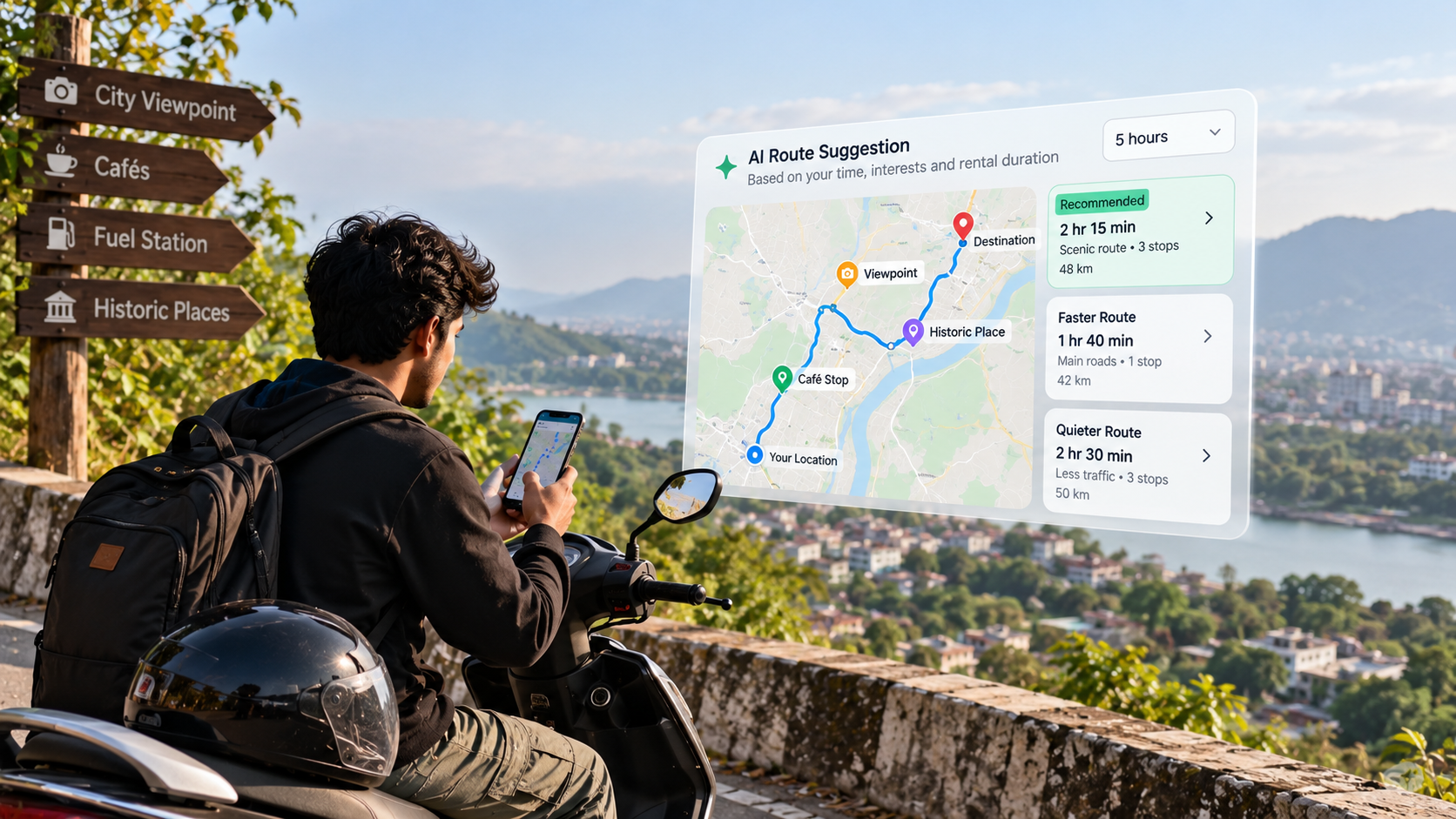
AI-powered route planning has the potential to make trip preparation more personal by helping riders compare routes, account for their plans and find useful stops along the way. For bike rental platforms like WavyGo, it also presents an opportunity to make the rental experience more useful beyond simply finding a vehicle.
What Is AI-Powered Route Planning?
Traditional navigation tools help people travel from one location to another. Depending on the service, they can provide directions, estimated travel times, traffic information and alternative routes.
AI can build on this foundation by analysing relevant information and helping users make decisions based on their individual needs.
Imagine arriving in a city you've never visited before. You have a rented scooter for six hours and want to see a few attractions before returning it. The shortest route between two places isn't necessarily the best plan for your entire afternoon.
You may need to account for travel time, planned stops, opening hours, road conditions and the rental return deadline. An intelligent planning system could help bring those details together and suggest a more practical itinerary.
The value isn't simply in using AI. It's in making a decision that would otherwise take the rider several searches and comparisons.
Why Route Planning Matters for Bike Rental Users
When you rent a bike, your time with the vehicle is often limited. You might have it for a few hours, a full day or a weekend. Poor planning can mean spending more time navigating unfamiliar roads and less time doing what you actually came to do.
Route planning can be particularly useful for three kinds of riders.
Travellers exploring a new city
Visitors may not know which areas are close together, how long a journey will take or where they can stop along the way. A well-planned route can help them organise their day before setting out.
Students and working professionals
Someone renting a scooter for local travel may care more about reaching a destination on time than discovering scenic roads. Their route recommendations should reflect that priority.
Weekend riders
A weekend ride might involve several destinations rather than a single endpoint. Planning the order of stops can help reduce unnecessary backtracking and make better use of the available time.
Different riders have different priorities. A useful route-planning experience should recognise that instead of treating every journey in the same way.
How AI Could Make Route Recommendations More Useful
An AI-assisted mobility system could use information supplied by the rider, along with reliable navigation data where available, to help compare possible journeys.
1. Planning around the available time
Suppose you rent a scooter for the afternoon and want to visit three places. A useful planner could help estimate how long the journeys might take and leave time for your stops and return trip.
The aim would be to create a realistic plan rather than simply recommend the shortest route between individual locations.
2. Recommendations based on the purpose of the ride
A person travelling to a meeting may want a direct route. Someone sightseeing may prefer to include places of interest along the way.
An AI-assisted system could use these preferences to organise recommendations around the rider's objective, provided the necessary data is available.
3. Finding useful stops
A route becomes more practical when it accounts for what the rider needs during the journey.
Depending on the destination and available map data, useful stops might include fuel stations, cafés, parking areas or tourist attractions. The system could help identify options that fit the planned route rather than sending the rider far out of the way.
4. Comparing travel options
The shortest route isn't always the most suitable. A longer road may be preferable if it avoids a known restriction or better fits the rider's preferences.
A route-planning system could compare available alternatives using travel time, distance and road information. It should only make claims about traffic, road conditions or safety when it has reliable supporting data.
5. Making changes easier
Plans can change once a journey begins. A rider might decide to skip a stop or spend more time at an attraction.
An AI-assisted planner could help reorganise the remaining itinerary around the new requirements. Current traffic and road information would still need to come from reliable navigation sources; AI alone cannot guarantee that a route is clear or safe.
What Information Would an Intelligent Route Planner Need?
Good recommendations depend on the quality of the information behind them.
A potential AI-powered route planner for bike rentals could consider:
- Starting point and destination.
- Available rental duration and return deadline.
- Preferred travel time and number of planned stops.
- Interests, such as sightseeing or visiting local cafés.
- Vehicle type and relevant range or fuel considerations.
- Route distance, estimated journey time and available road information.
Not every recommendation requires AI. Conventional maps and routing services are better suited to calculating road routes and providing navigation data. AI could add value by helping interpret a rider's preferences, compare options and organise a practical itinerary.
Combining the right tools is more useful than trying to make AI responsible for every part of the journey.
Where AI Fits Into WavyGo's Mobility Vision
WavyGo's mobility platform focuses on connecting customers with two-wheeler rental providers. We see opportunities to make the experience more useful by helping riders make informed choices before and during a rental.
One area worth exploring is AI-assisted trip planning.
For example, a future WavyGo experience could allow a rider to select a destination, specify how long they have the vehicle and indicate the places they would like to visit. The system could then help organise a suggested itinerary using suitable route and location information.
Another possibility is helping riders compare journey plans before confirming how they intend to use their rental time.
These are potential areas for future development, not claims about features currently available on WavyGo. Any implementation would need to account for data accuracy, privacy, operating costs and the reliability of the underlying navigation services.
The goal would be straightforward: make planning a journey less complicated while leaving the final decisions in the rider's hands.
The Challenges of Using AI for Route Planning
AI can help organise information, but it doesn't eliminate the uncertainty involved in travelling.
Traffic can change unexpectedly. Roads may be closed, weather can affect conditions and map information may be outdated. A recommendation based on incomplete information can be less useful than a simple route from a reliable navigation service.
There are also practical questions around personalisation. A system should collect only the information it needs, handle location data responsibly and explain its recommendations clearly.
For bike rental users, safety must remain a priority. Riders should follow traffic regulations, use appropriate protective equipment and verify important route details before travelling. They should never rely solely on an AI-generated suggestion to determine whether a road is safe or suitable.
The best approach is to use AI as a decision-support tool, supported by reliable mapping information and the rider's own judgement.
What the Future Could Look Like
As mobility platforms develop, there may be more opportunities to connect vehicle discovery, rental duration and trip planning into a single experience.
Instead of treating a rental as a transaction that ends when the keys are handed over, platforms could help customers think about how they'll use the vehicle during their booking.
For riders, that might mean less time comparing options and more time planning a trip that suits their schedule. For rental providers, better-informed customers could also mean clearer expectations around rental duration and return times.
These benefits will depend on how well the technology is designed and whether it solves real problems for users. Adding AI to a product is not valuable on its own; the technology needs to make the experience measurably more useful.
Frequently Asked Questions
What is AI route planning?
AI route planning uses artificial intelligence to help evaluate journey requirements and organise suitable travel recommendations. It may complement conventional navigation by considering user preferences, planned stops and time constraints.
How is AI route planning different from Google Maps?
Navigation services such as Google Maps provide directions and, where supported, traffic-aware route alternatives. An AI assistant could help interpret a broader request, such as organising several stops around a rental deadline. Its usefulness depends on the quality of the underlying map data and its integration with navigation services.
Can AI find the fastest route?
AI may help compare route options, but accurate travel-time estimates depend on reliable routing and traffic data. No system can guarantee the fastest journey under all conditions.
Can AI plan a sightseeing trip on a rented bike?
Potentially. An AI-assisted planner could help organise destinations, estimate journey times and suggest stops based on a rider's interests. The final itinerary should still be checked against current opening hours, road conditions and travel requirements.
Does WavyGo currently offer AI-powered route planning?
AI-assisted route planning is discussed here as a potential future capability. Readers should check WavyGo's current platform for the features and services that are actually available.
Making Every Ride Easier to Plan
A good journey starts with a practical plan. Knowing where you want to go, how much time you have and what to check before setting off can make a bike rental easier to manage.
AI offers an opportunity to bring those details together and make travel recommendations more relevant to individual riders. The real test will be whether it saves time, improves decisions and works reliably in everyday conditions.
At WavyGo, we're interested in how technology can make two-wheeler mobility more convenient for customers and rental providers.
Visit https://wavygo.in/ to learn more about WavyGo and explore the platform.
